Home / Research
● RESEARCH
Research Overview
Six interconnected domains where Deep Intelligence Lab advances the frontiers of artificial intelligence and its real-world clinical applications.
Our research is driven by a fundamental question: how can AI reliably assist human decision-making in high-stakes domains? We pursue this through foundational model development, privacy-preserving systems, and domain-specific applications in medicine, remote sensing, and human activity analysis.
Medical Imaging & Diagnostics
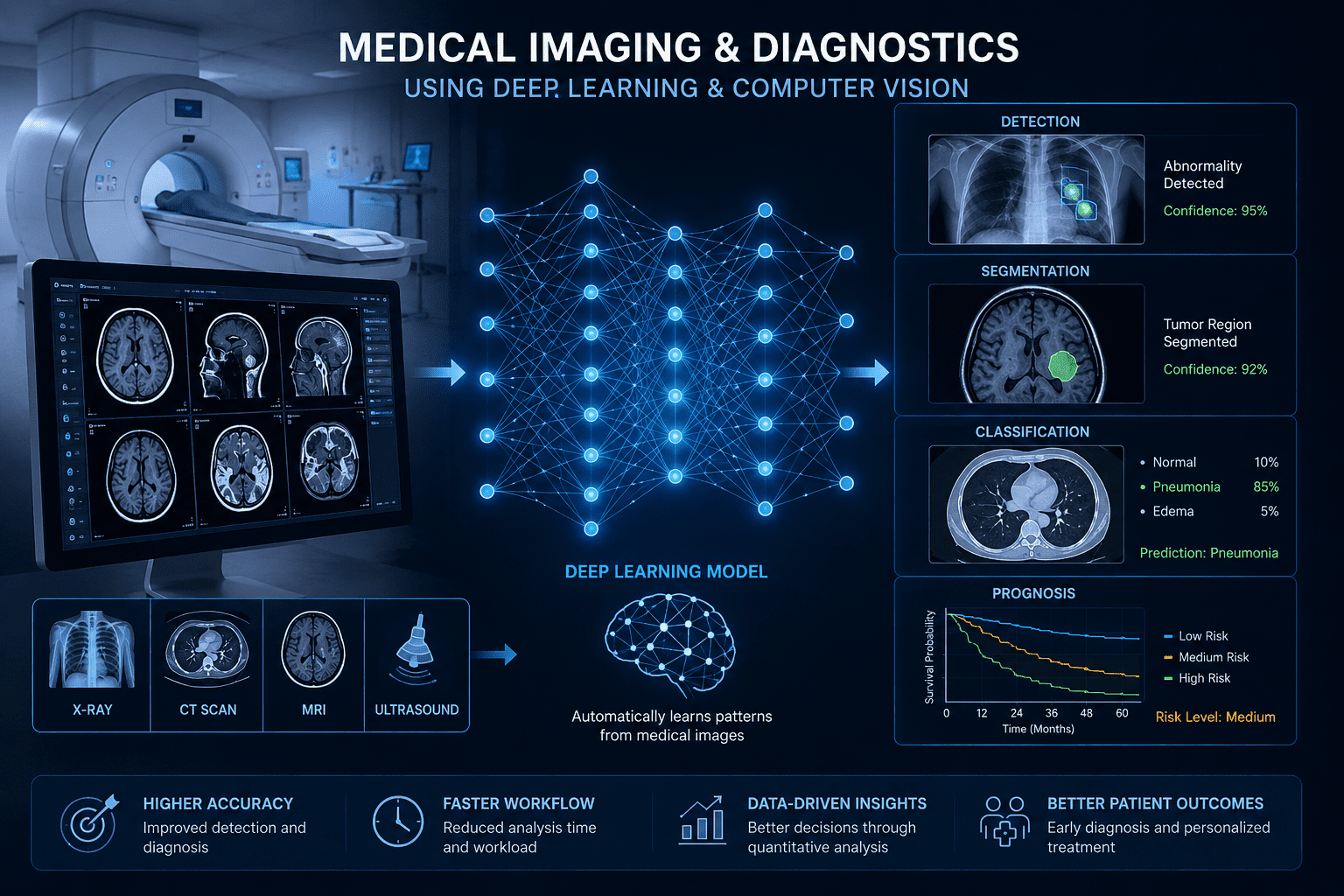
Our medical imaging research develops AI diagnostic systems that assist clinicians in detecting and grading diseases from visual data. We have published extensively on skin lesion classification using dermoscopy, lung nodule detection from CT scans, brain MRI tumor grading, and chest X-ray disease classification.
Our systems are designed to meet clinical-grade accuracy standards and have been validated on datasets from multiple hospitals and public benchmarks including ISIC, CheXpert, and BraTS.
MRI Analysis
Dermoscopy
X-Ray
Tumor Segmentation
Precision Agriculture
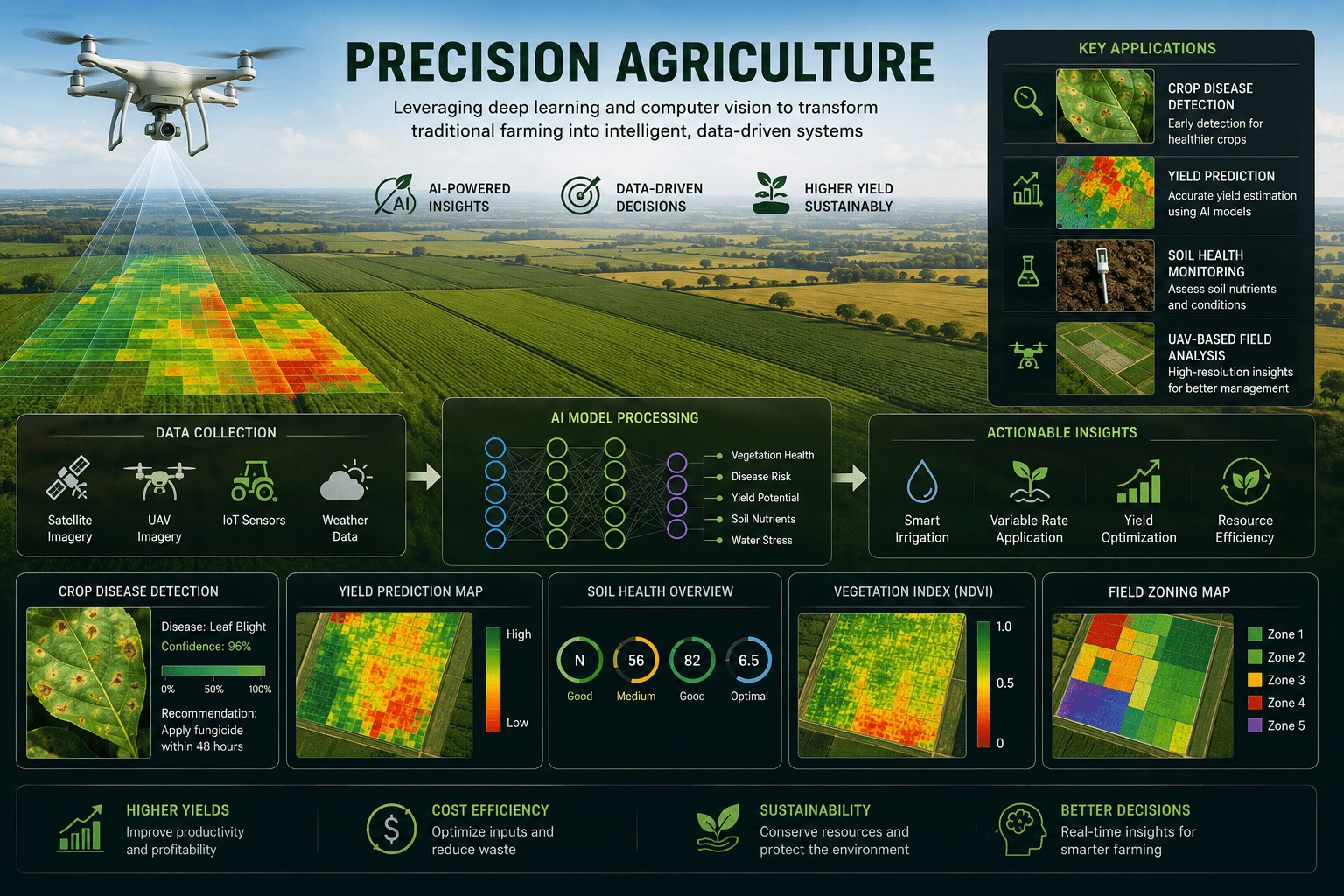
We leverage deep learning, computer vision, and IoT sensor fusion to transform traditional farming into intelligent, data-driven systems. Our work spans automated crop disease detection, yield prediction models, soil health monitoring, and UAV-based field analysis.
We develop lightweight AI models optimized for edge deployment in low-resource agricultural environments — enabling real-time decision making directly in the field without cloud dependency.
IoT Fusion
Crop Disease Detection
Yield Prediction
UAV Imaging
Soil Monitoring
Privacy & Security in AI
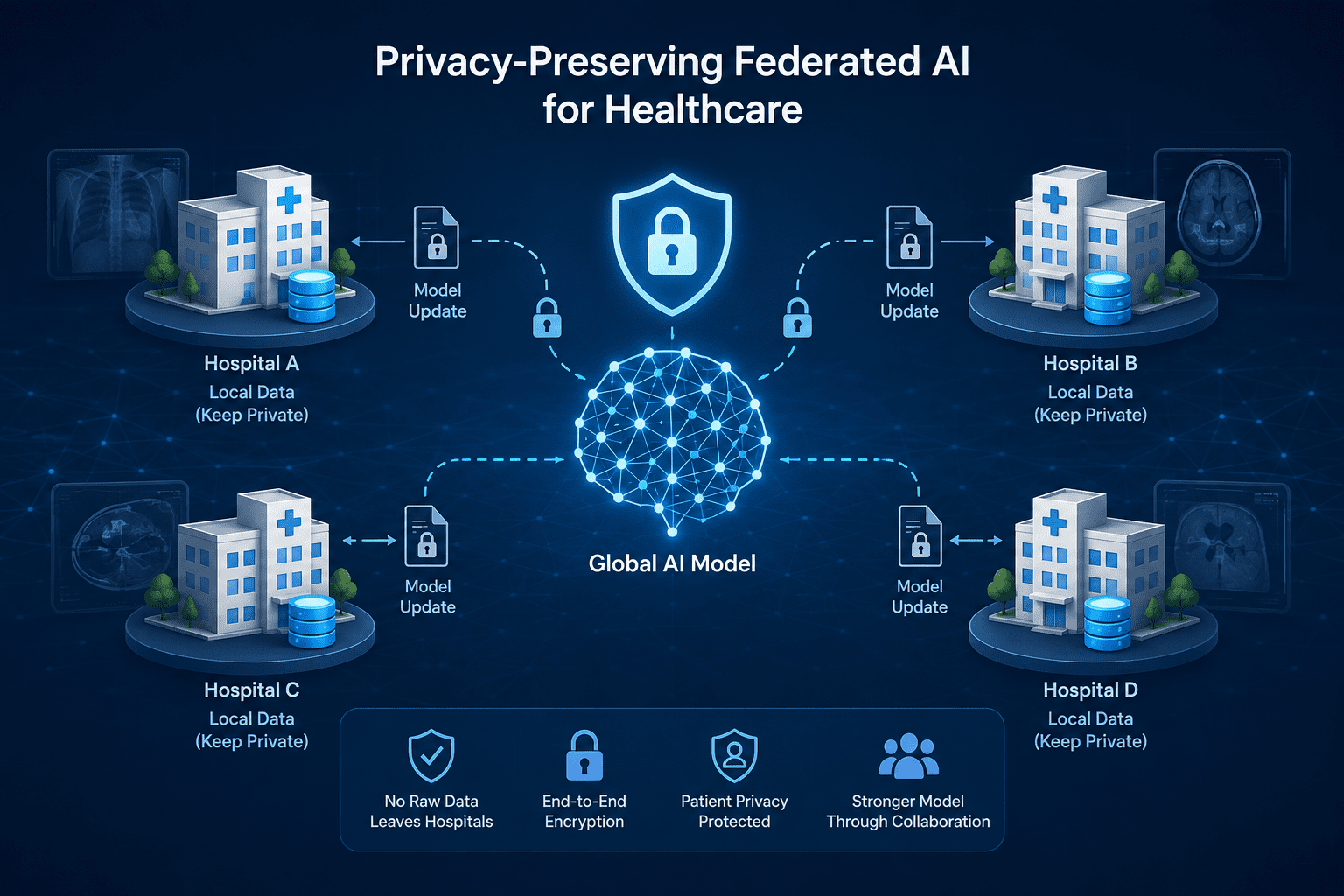
Medical data privacy is a fundamental barrier to building AI systems that generalize across hospitals and countries. Our federated learning research builds distributed training systems that keep sensitive patient data local while allowing model knowledge to be shared globally.
This enables multi-institutional AI collaboration without compromising patient privacy — critical for real-world clinical AI deployment at scale.
Federated Learning
Privacy-Preserving
Distributed Training
Edge Computing
Differential Privacy
Remote Sensing & Earth Observation
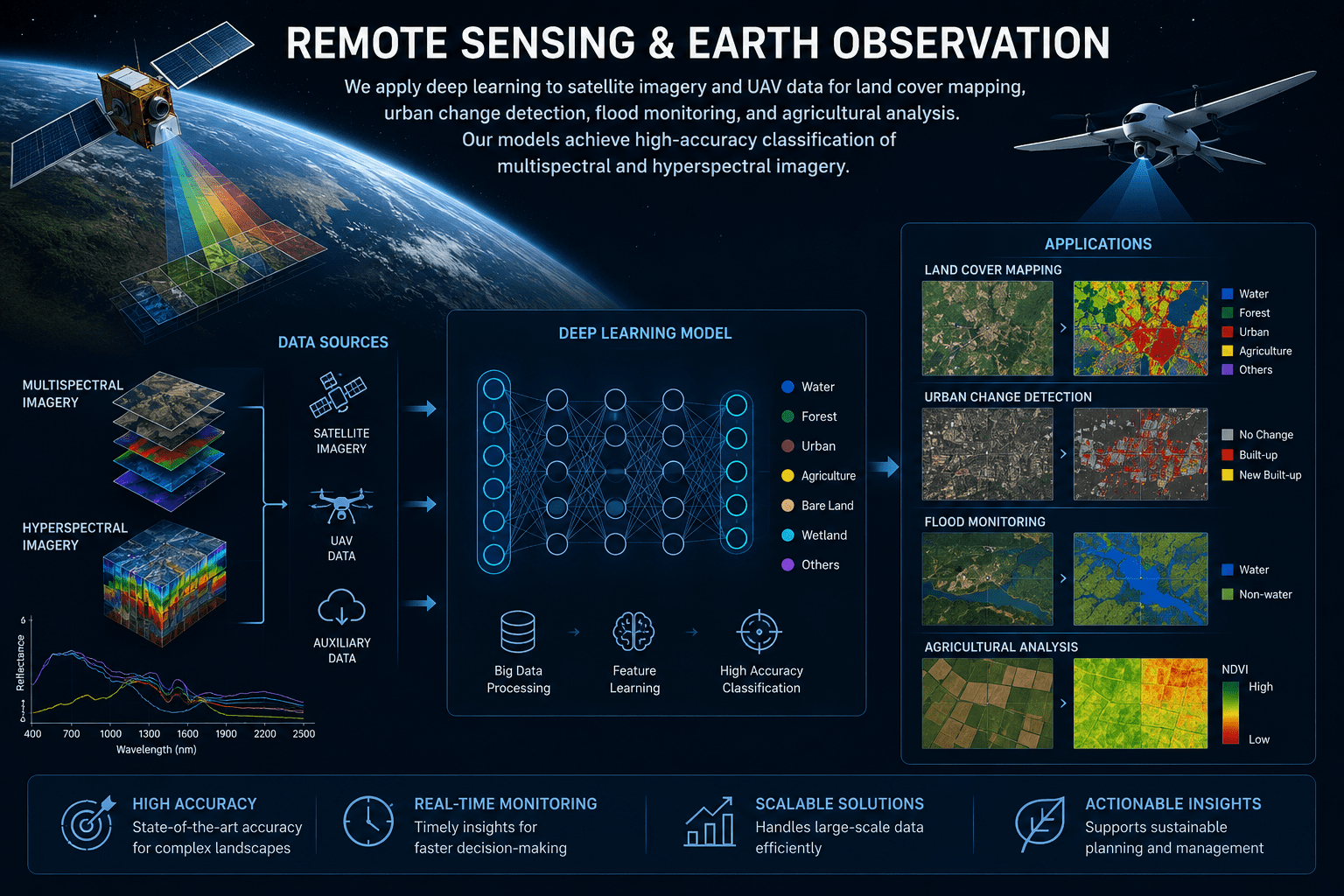
We apply deep learning to satellite imagery and UAV data for land cover mapping, urban change detection, flood monitoring, and agricultural analysis. Our models achieve high-accuracy classification of multispectral and hyperspectral imagery.
We have developed benchmark datasets for remote sensing classification tasks in Middle Eastern and South Asian environments.
Satellite Imagery
UAV Analysis
Land Cover
Hyperspectral
Flood Detection
BIOMEDICAL
🔬
Biomedical Signal & Histology
Our biomedical research extends beyond imaging to histological slide analysis, microscopy-based cell detection, and signal-based disease classification. We work on cancer grading from tissue biopsy images and nuclear segmentation in whole-slide imaging.
Collaborating pathologists from partner hospitals provide clinical validation and ground-truth annotations for our datasets.
Histology
Whole-Slide Imaging
Cell Detection
Cancer Grading
Gait & Activity Recognition
Human gait analysis using deep learning enables contactless biometric identification and health monitoring. Our group works on skeleton-based gait recognition, abnormal activity detection in surveillance video, and fall detection for elderly care.
We contribute both novel datasets and state-of-the-art recognition architectures — with applications in security, healthcare, and smart city systems.
Gait Recognition
Action Detection
Skeleton-Based
Fall Detection
Biometrics
GAIT & ACTIVITY